
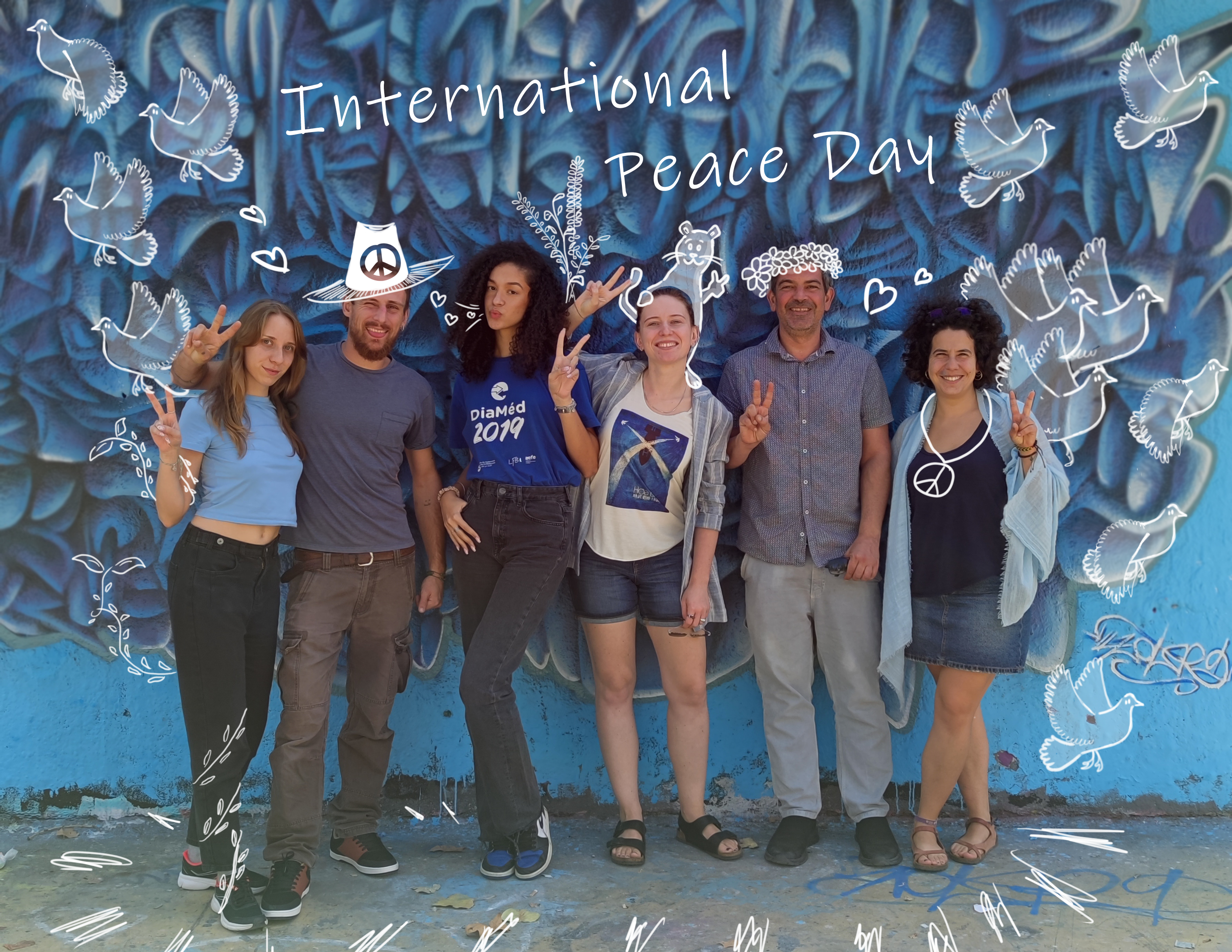
On a day as significant as today—September 21, the International Day of Peace—we at the FCV wish to draw attention to a matter of concern: we are living through a peak moment for the culture of war.
We say this not only because of the number of wars currently taking place worldwide (around 60!), but because the culture of war is gaining more and more followers, friends, and "likes" every day.
Many people view violence and the law of the strongest as valid methods for resolving conflict—or even regard war as a necessity. This can be explained by a simple fact: in 2022, war sits at the very pinnacle of our political, institutional, and ideological systems, as well as our belief systems.
The absolute triumph of the culture of war (or the mindset of "Why seek peace when I can wage war?") is a matter of the utmost urgency and gravity, as it permeates and corrupts everything: relationships between individuals, communities, and groups with conflicting interests.
It is striking that this occurs in every country across the globe—in democratic systems and authoritarian regimes alike, in nations with or without imperialist ambitions, and among those possessing or lacking weapons of mass destruction—despite the vast diversity of beliefs and ideologies, and the shared positive values of kindness, reciprocity, and solidarity.
The culture of war faces no equal adversary—neither the leaders and spokespersons of mainstream ideologies and religions, nor the individuals working to foster the conditions for a culture of peace to prevail. These include educators, activists, and organizations dedicated to peace, global justice, and human rights—groups that carry out projects and activities of great potential value, yet whose impact is easily dissipated within the prevailing culture: that of war.
One example of the absolute success of that culture is that all wars are legal. We live in a world where war draws no moral, ethical, or legal condemnation from any legal system—sending a message that is as clear as it is forceful.
It is a culture that glorifies barbarism and is more dangerous than war itself, because it shapes the way we view, understand, and explain world events—to the point of justifying death, torture, and extermination—and because its primary function is to maintain power relations based on brute force and the use of extreme violence.
Among its most obvious effects are the justification of all wars and criminal acts, and the abrupt halting of the few achievements and many struggles for freedoms and human rights worldwide; this disproportionately affects the most vulnerable individuals and communities—or, in reality, all those unable to use war to defend their interests in the absence of any other means.
The culture of war creates and reinforces viewpoints, behavioral patterns, narratives, and power dynamics that subtly hinder the success of any social, economic, educational, or cultural initiative—whether large or small—aimed at promoting or fostering the values and lessons of peace education. These dynamics are rooted in lies repeated time and again, such as the notion of "defeating your colleague." Why does everyone agree that "violence only begets more violence," yet no one clearly states that "war only begets more war"? Is there any worse manifestation of violence than war? Must we wait for a nuclear catastrophe or a third world war before the highest governing authorities and the multilateral bodies that convene them—representing all of humanity—decide to abolish war?
At the FCV, we propose starting this work today. Our line of reasoning is very simple (we are not experts in the field):
– No objective data has ever justified any war.
– No war has ever achieved the objectives it pursued.
– Armed conflicts have a devastating impact across all spheres and sectors, causing casualties, injuries, and displacement, and instantly wiping out most social, cultural, human, economic, and environmental improvements and progress. In war, there are only losers; there are never any winners.
For this reason (and many others that could be added), our conclusion is clear:
-No end justifies war as a means to achieve it. No war can be considered a valid means of resolving any conflict, as it represents the cruelest, most unjust, and most disproportionate expression of violence. War only breeds more war.
-Wars must be prohibited and illegal, because they run counter to all the values and principles governing relations between individuals, countries, and communities.
–Starting a war is a crime against humanity. Wars can only be viewed as crimes, and those who initiate or participate in them as criminals.
To shift from a culture of war to a culture of peace and to transform the cultural and institutional paradigm, we consider it urgent and necessary to abolish war, ensuring that no country, government, or authority has the right to initiate a war under any circumstances.
Classifying war as a crime represents a paradigm shift; it means declaring that violence is not the appropriate way to resolve conflicts, but rather a strategy that serves only private interests contrary to the general public interest.
Legally prohibiting and criminalizing the initiation of and participation in war would act as a deterrent, potentially marking a turning point regarding the frequency and impact of wars worldwide. By 2022, humanity should have progressed sufficiently to resolve complex conflicts—maintaining democratic freedoms and security, and addressing any issue, however complex or delicate, without resorting to armed violence.
We demand that this become the first global goal for sustainable development, and we call for an international alliance of all entities willing to work toward the United Nations Security Council adopting a resolution that expressly abolishes all wars.
Hoping that we may one day celebrate the abolition of all wars, we wish you a very happy International Day of Peace!
(*) War must not be confused with or equated to legitimate self-defense against an attack, nor to the prosecution of any crime, however serious. All countries and human communities have an inalienable right to ensure their security and integrity, and to protect their citizens, institutions, and legitimate interests against external or internal aggression, in accordance with their own laws and international treaties.