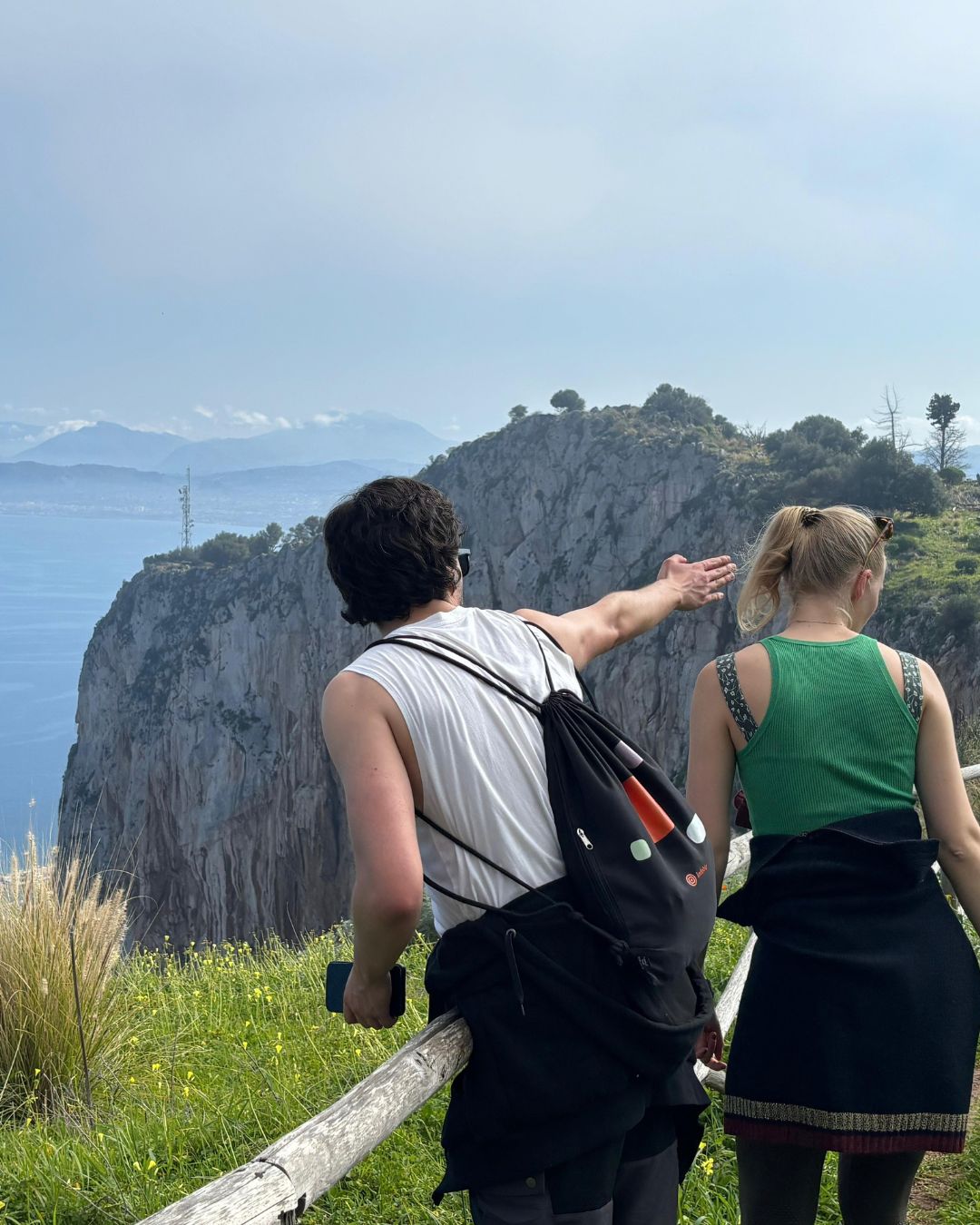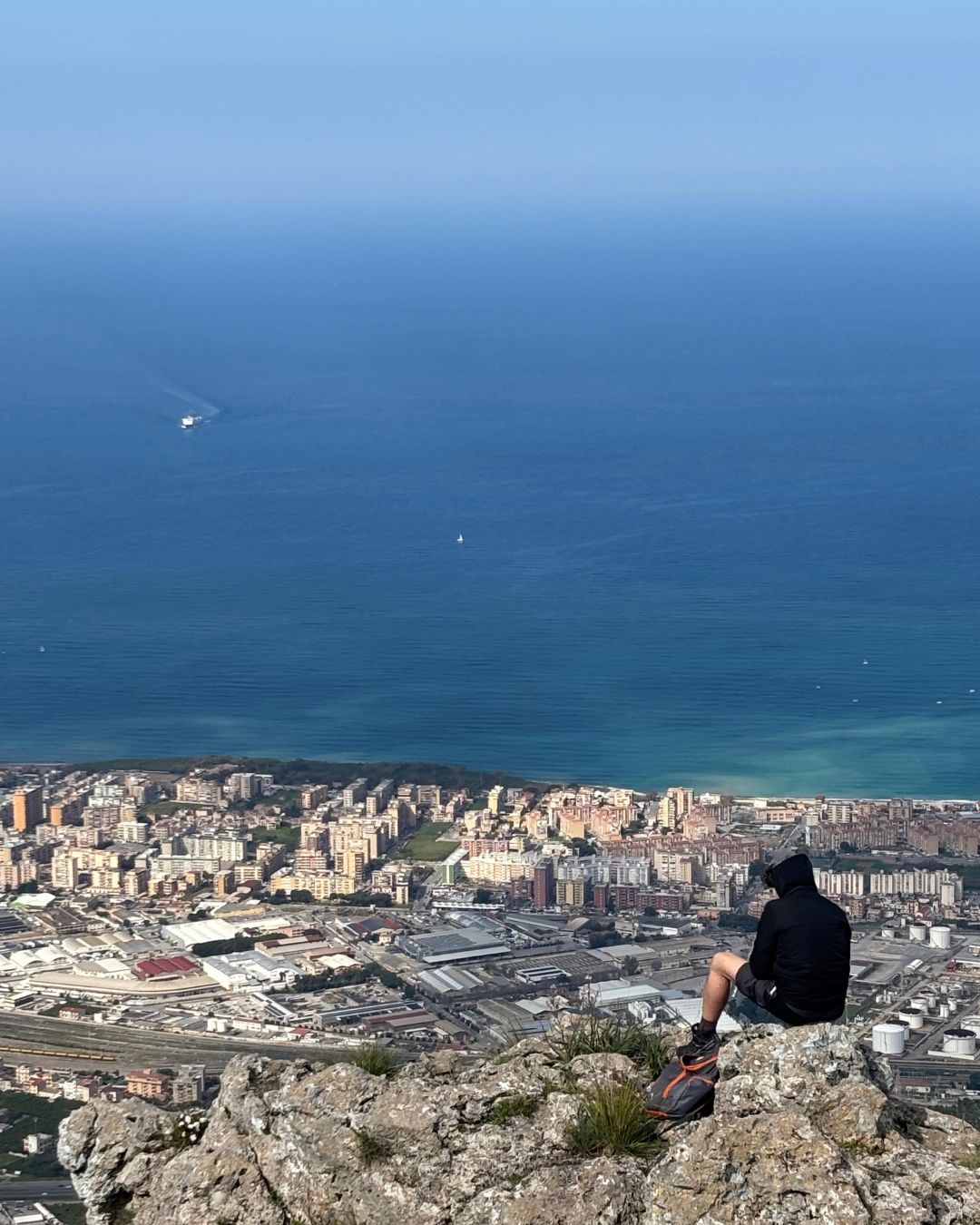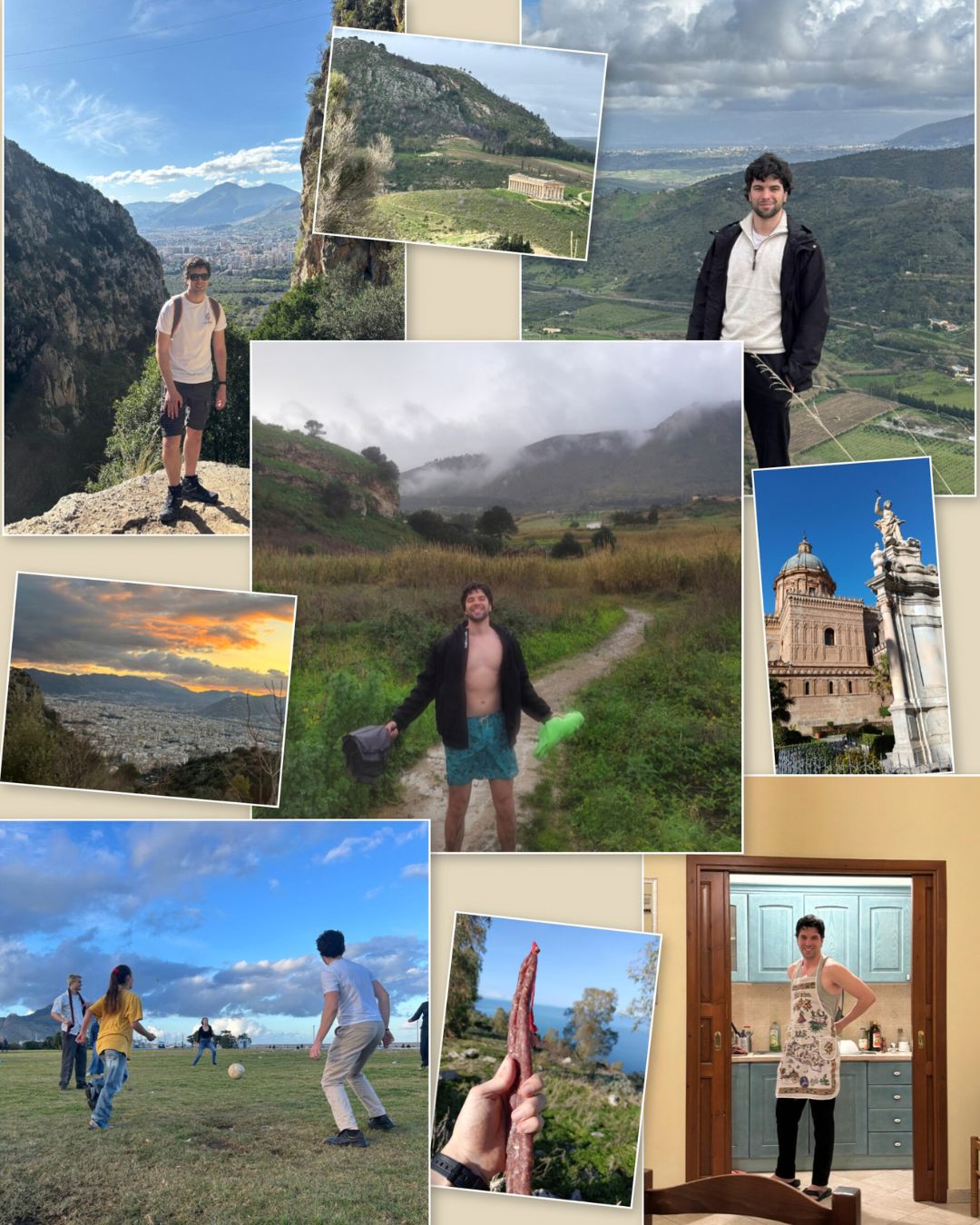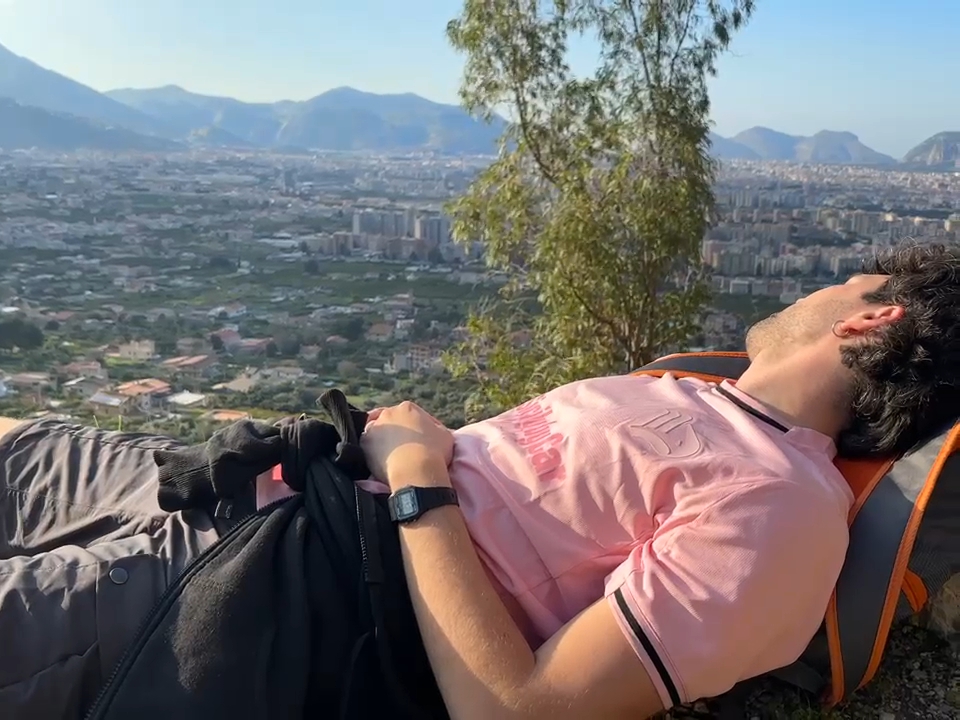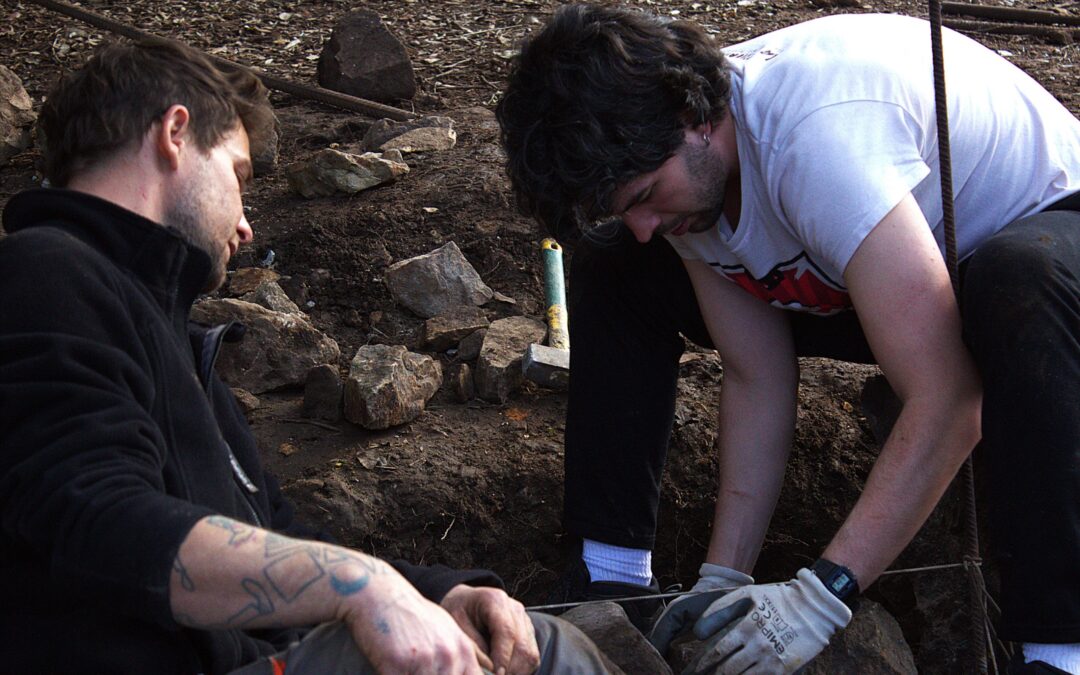
Meet Arnau Pallerola Salat, who decided to leave his usual routine behind for a few months and begin a volunteering experience in Palermo, Sicily. Now that he is back home, he shares what he found outside his comfort zone: a new city, people and realities very different from his own, unexpected lessons and an experience that brought him home with a different perspective on himself and the world around him.
Sunday, 11 January. The beginning of the most transformative journey I have ever experienced. With the always welcome support of Fundació Catalunya Voluntària, I set off for the city of Palermo, Sicily, full of curiosity about meeting the people who would become my fellow volunteers and flatmates.
When you agree to start from zero in a new country where you know nothing and no one, the first few days are an explosion of new information for your brain. Every corner you turn reveals a street you have never seen before, every word you hear is a new word, every face you see is a face you are seeing for the first time, and every task you are asked to do is something you have to do for the first time. You face all of this alone, far from your family, friends and comfort zones. There is no escaping it.
After a few days, all of this absorbs a great deal of energy, which is why arriving mentally prepared for what it involves, with both your heart and your mind wide open and ready to absorb all this new knowledge quickly, is essential if you do not want to become overwhelmed.
In my case, I went there with an absolute curiosity about all these things. I could not wait to experience it. I knew there would probably be moments of emotional exhaustion, but that was also part of the journey, and I wanted to experience those moments too, so that I could learn how I respond to situations I had never faced before.
Everything becomes new information about yourself, creating a broader sense of self-awareness than the one you arrived with. So far, everything was positive!
In my case, I was lucky enough to find a project that interested me from the very beginning, fellow volunteers with whom I connected from the first day, and a city where I wanted to integrate as if I were another Palermitan.
Still, it was not just luck. It was also a matter of mindset. As I said before, approaching the experience with an open mind and an open heart can make exactly the same experience much more enriching.
The cooperative that managed my volunteering experience and that of my fellow volunteers in Palermo is called Palma Nana. They regularly sent us to collaborate with four different organisations, and we also occasionally took part in other projects. This had both its advantages and disadvantages.
For me, it was very positive because it gave me the opportunity to encounter more personal realities, discover more corners and stories of the city, become more integrated into it and make the overall experience much broader. Every day was different, and I was always curious to find out what we were going to learn.
The downside was that, because our hours were spread across so many different places, it was more difficult to go deeper into whichever place we found particularly interesting. We also had to interact with many more people, which I personally thought was fantastic.
For one of my fellow volunteers, who was Swedish, however, the cultural and personal impact was enormous, so during some weeks she ended up feeling much more drained of energy. Her courage in accepting a project like this is something to admire. For her, it sometimes seemed as though she had gone to live on another planet, particularly when she compared it with some of the neighbourhoods we had to visit and some of the stories we had to hear…
Danisinni was one of those neighbourhoods, a place I will never forget. On a social level, some similarities can be found with the favelas of Brazil. Danisinni is a small neighbourhood located close to the city centre, with only one public access point for vehicles and another hidden entrance for pedestrians.
The neighbourhood is completely disconnected from any public institution. There are no schools, shops, pharmacies, restaurants… There is no reason why an ordinary resident of Palermo would need to go there unless they were visiting someone they knew or helping the people who live there.
The neighbourhood also has no electrical infrastructure, which means that at night you need a flashlight to walk through the streets. There is no running water either. Many houses have a well. The neighbourhood is located above an old river whose water now runs only underground, so it is thanks to this natural underground flow that many homes are able to access water.
The houses are extremely precarious. A very large proportion of the adults are illiterate, which is linked to the fact that the inhabitants of Danisinni hardly ever leave the neighbourhood and to its marginalisation. They will never tell you that they are from Palermo. They are from Danisinni. When the children leave the neighbourhood for any reason, they tell you that they are going “to the city”.
And that is genuinely how it feels when you walk around there, almost as if it were a small independent village inside Palermo. That pedestrian entrance, hidden inside a small tunnel next to a corner in an already marginalised area of Palermo, felt like the entrance to a reality that hits you unexpectedly, something you do not see coming and that leaves you disoriented.
Beginning to hear the story of Danisinni was an emotional roller coaster, starting with the knowledge that many boys and girls may never have the opportunity to escape a difficult life.
According to what people from the parish told us, when boys turn 16, they already begin doing jobs for the mafias, while many of the girls are already becoming pregnant.
Still, one positive aspect of the neighbourhood is that there is hope. If you compare the situation with how things were twenty years ago, a positive trend is already visible. The only formal institution that has consistently looked after the people of Danisinni is the parish, particularly since the arrival of a highly proactive monk called Fra Mauro.
He has worked to create a genuine community life in Danisinni. Volunteer doctors now come to the neighbourhood to vaccinate residents, food arrives from Cáritas, and there is a gym, a library and educational activities for children. There is also a new foundation through which the neighbourhood receives financial and material donations.
This is where volunteering becomes more important than ever, even if it may not seem like it at first. In our case, we helped a lot with organising structured leisure activities for the children, activities through which they could develop key values that they cannot easily learn when they spend the whole day alone in the streets.
Cooperation, teamwork, social awareness and general knowledge: these were things we could offer to the children of Danisinni, many of whom often lack adult role models.
Ultimately, volunteering became the perfect ecosystem for learning a thousand things on a cultural and social level, as well as about myself, while having more fun than ever before.
Beach, mountains, city, villages, parties, sport, dance, friendships, love. Everything fit into the most spectacular half year anyone could imagine.
None of this, however, would have been possible without putting everything I had been doing back home on hold and taking the time to reflect on a decision that might initially seem risky.
Now I have returned home with a backpack full of new experiences that, whatever happens in life, nobody will ever be able to take away from me.
You have already taken the time to stop and read about this experience. Perhaps this is a good moment to look inward and ask yourself: do I want to live somewhere else for a while in exchange for the possibility of returning transformed, while also having helped vulnerable people?
Arnau Pallerola Salat