
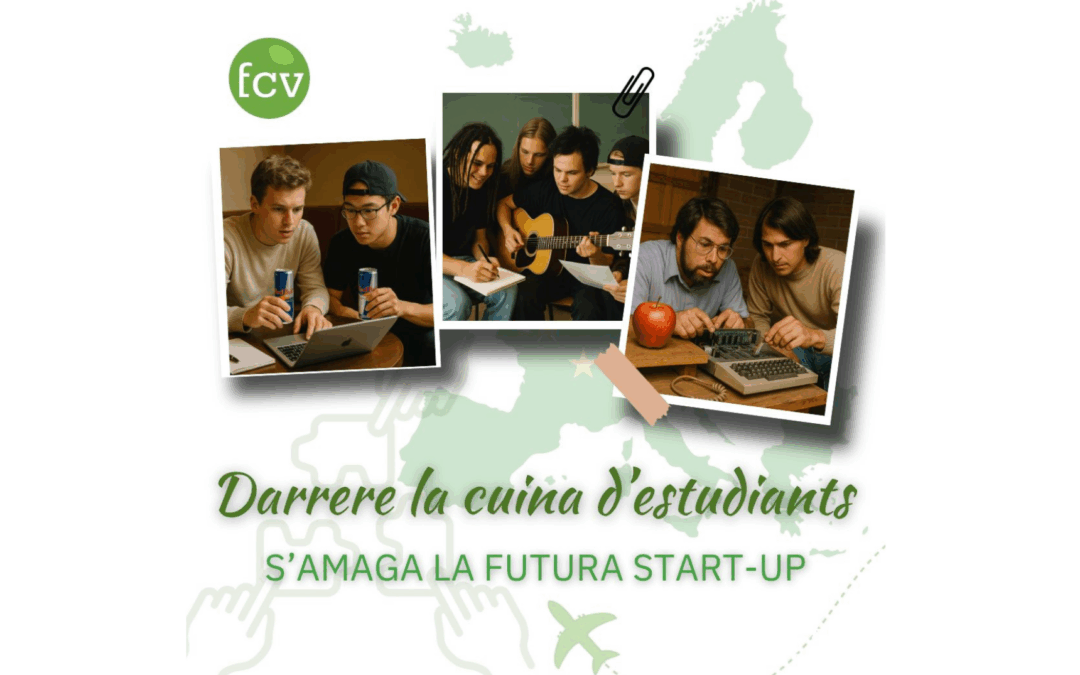
A summer festival at St Peter’s Church in Liverpool, 6 July 1957. On stage plays the school band The Quarrymen, and their 16-year-old leader John Lennon notices a boy with a guitar in the crowd. During the break, 15-year-old Paul McCartney walks up to the stage and plays “Twenty Flight Rock” on an upside-down guitar, since he is left-handed. Lennon is impressed by his skill and invites the newcomer to join the band. This moment will change the world of music forever.
What began as a random meeting of two teenagers grew into the phenomenon of The Beatles, a band that sold more than 600 million albums and still remains the most influential music group in history. Their first concerts took place in school halls, their rehearsals in basements, and their fame was built on the same youthful energy that filled the walls of their schools.
This story is not unique. Across the ocean in 2004, Harvard student Mark Zuckerberg is in his dorm room at Kirkland House. A Budweiser bottle is on the desk, Eminem plays from the speakers, and on the computer screen appears the first code of Facebook. At first it was a simple idea to create a closed social network for university students. In the first 24 hours The Facebook had 1200 users. Today this student project is worth 800 billion dollars and connects one third of humanity.
At the same time, on the other side of the planet, in Finland, another story unfolds. Helsinki, 1994. Four 16-year-old students gather in a school basement to play funk and grunge. They call themselves The Rasmus, after a character from children’s books about Rasmus the traveler. They rehearse between classes, play at classmates’ graduation parties, and dream of recording an album. They manage to do it even before finishing school. Their debut “Peep” comes out in 1996.
Seven years later The Rasmus release “Dead Letters” with the hit “In the Shadows” which conquers the world. The song tops charts in eight countries, reaches more than 400 million views on YouTube, and turns the Finnish boys into global stars. The album sells two million copies and the band begins to play at the biggest festivals on the planet.
This phenomenon goes beyond music. In 1976 at Mount Temple School in Dublin a note appears on the notice board from 14-year-old Larry Mullen Jr saying “Looking for musicians for a rock band”. Among those who responded was Bono, a boy who could not play any instrument but had an extraordinary charisma. Forty-five years later U2 remains one of the most successful bands in the world with revenues of more than 800 million dollars.
The world of technology shows the same pattern. In 1998 at Stanford University two graduate students, Larry Page and Sergey Brin, build servers with LEGO pieces and cheap computers in their dorm rooms. Their search engine BackRub processes just 10 000 queries a day. Today Google, born from that student project, processes 8.5 billion queries daily and is worth two trillion dollars.
The story of Dropbox is similar. In 2007 at MIT student Drew Houston is on a train to New York when he realizes he has forgotten his USB stick with important files. Frustration turns into an idea: what if files were stored in the cloud and accessible from any device? In three hours he writes the first code of Dropbox. Thirteen years later the company is worth 10 billion dollars.
What unites all these stories? The environment. A place where young talents naturally meet, exchange ideas, inspire each other, and create the future. Schools and universities become incubators of genius not because of formal education but thanks to that unique cocktail of creativity, ambition, and fearlessness that belongs to youth.
Today the Erasmus+ programme creates that same magical environment on a European scale. When a talented programmer from Warsaw meets a brilliant designer from Barcelona in a university library in Milan, the potential for the next great revolution is born. History proves that the best ideas do not emerge in corporate offices but where young minds meet freely and create something entirely new.